
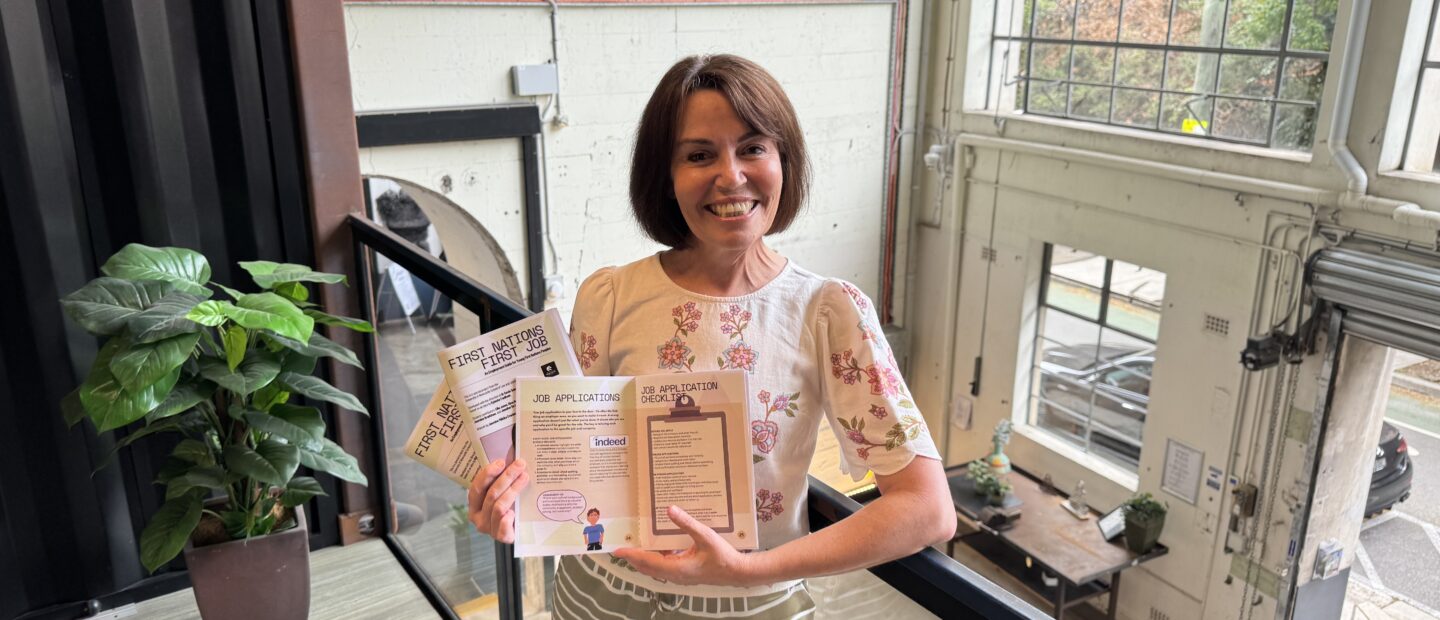
Getting a job is tough. Now help is at hand, with a culturally grounded resource to empower young First Nations job seekers, thoughtfully created by University of Newcastle students.
The King’s Trust Australia is proud to sponsor the launch of First Nations, First Job: An Employment Guide for First Nations Young People, a groundbreaking resource that places culture at the heart of employment guidance for young Aboriginal and Torres Strait Islander Peoples.
The guidebook was launched on 31 October 2025 by the University of Newcastle’s School of Law and Justice, in partnership with the Wollotuka Institute. Unlike traditional employment resources where culture can be treated as an afterthought, this guide centres First Nations perspectives throughout every aspect of the job-seeking process.
A Student-Led Achievements
The employment guide represents two years of work by four Bachelor of Law students. One of the students, Jennifer De Luca, is The King’s Trust Australia’s Project Lead for Employment, playing a dual role as both a researcher and a professional supporting employment pathways for young people.
The guide emerged from direct community consultation and covers essential topics including resumes, job applications, Tax File Numbers, superannuation, and training pathways. The guidebook features original artwork by Jasmine Miikika Craciun, an Indigenous artist and University of Newcastle alumna.
Supporting Our Mission
This project aligns closely with The King’s Trust Australia’s mission to help young people prepare for and transition to meaningful employment. Through programmes such as Get Into Reef Conservation and other employment initiatives, the organisation creates pathways that build confidence and connect young people to employers, with particular focus on inclusive, culturally responsive support for young First Nations People.
The employment guide will be published on the University of Newcastle’s website and made freely available to young First Nations people, educators, and employment support services across Australia. This project demonstrates what becomes possible when organisations, educational institutions, and communities work together to create resoirst urces that truly meet young people’s needs.


